“To extend compassion to a so-called villain, to forgive those who have wronged you, and to find common ground with someone who has been awfully isolated are not acts typically met with fireworks and swelling violins. More often than not, they are pushed away. To love, really love, is to do them anyway.” ― Vironika Tugaleva, The Love Mindset
Azaleas in Lendonwood Gardens. Copyright 2016 by R.A. Robbins
“The test of our progress is not whether we add more to the abundance of those who have much; it is whether we provide enough for those who have too little.” — Franklin D. Roosevelt
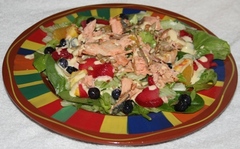
May is National Salad Month, but I think a nice fresh garden salad makes any meal a celebration. When you think of a garden salad, or green salad what comes to mind? A bowl of iceberg lettuce with maybe a little purple cabbage or grated carrot mixed in and one slice of tomato on the side? Do you sometimes get bored with that?
Not Your Ordinary Garden Salad
We all get tired of a plain old green salad. Try the following suggestions for greens, veggies, dressing and other ingredients to jazz up that ordinary salad. Add a little protein to your salad and make it a meal.
Be Daring in Your Choice of Greens
With hundreds of varieties of salad greens, why get stuck on iceberg lettuce? New time try something different. Use the list below to help you get started.
Arugula (also known as rocket, roquette, rugula and rucola). Low in calories and high in vitamins A and C the leaves have a distinctive peppery flavor.
2. Belgian endive is a leaf lettuce which is related to chicory and escarole with crisp, tightly packed leaves and a slightly bitter taste..
3. Dandelion greens are high in vitamins A and K, calcium and iron. The newest leaves are said to be less bitter. Before you go harvesting the greens in your back yard be sure you are not using herbicides, insecticides or other harmful chemicals on your lawn.
4. Escarole is a type of endive that is less bitter than other types and it good either eaten raw or lightly cooked.
5. Iceberg or head lettuce is what many people think of when they hear the words lettuce or salad. Iceberg lettuce is known for it’s crisp sweet tasting heads. It also keeps longer than some of the other lettuces. The large leaves may also be used like a tortilla to make lettuce wraps.
6. Mesclun (also known as Spring Mix) is the French name for a mix of a variety of tender young lettuces. These often include chervil, arugula, lettuce and endive.
7. Cabbage may not be an ingredient you think of for salads but the mild flavor make it a perfect bed for spicier salad ingredients.
8. Radicchio is a red lettuce in head form (resembles red cabbage) that is bitter and peppery but adds a nice accent flavor to salads when added in small amounts.
9. Romaine has long, deep green leaves. It also has a deep flavor and sturdy leaves that work well in a salad. Romaine lettuce is a good source vitamins A, C, B1, B2, manganese, folate, chromium, dietary fiber, as well as the minerals potassium, molybdenum, iron, and phosphorus.
10. Spinach is a source of Vitamin A. It is rich in iron, calcium and protein. Spinach gives a good splash of dark green color and it’s own flavor to a green salad. It is also very good lightly cooked in a little olive oil with garlic.
11. Watercress has small spicy leaves that are a good flavor addition to a salad.
Salad Dressing: How to Make a Basic Vinaigrette
The formula for a basic vinaigrette is 3 to 1. That is 3 parts oil to 1 part vinegar. If you want to make 1 cup of dressing use ¾ cup oil and ¼ cup vinegar. If you want to make a small amount try 3 tablespoons oil to 1 tablespoon vinegar.
I use olive oil for the benefits of the Omega 3 Fatty Acids, but any good vegetable oil will work. Even your basic canola or sunflower oil may be used. You can also get fancy and use flavored oils or add a little sesame or flax seed oil to your regular oil for flavor.
The vinegar is also up to you. Regular apple cider vinegar works, but I prefer balsamic or red wind vinegar. Flavored vinegars like raspberry also work nicely for some dressings. You don’t even have to use vinegar at all. Citrus juice such as orange, lemon, grapefruit or lime may be substituted.
A basic vinaigrette starts with the vinegar or other acid in a small bowl . Add salt and pepper or other seasonings as desired. While beating the vinegar with a wire whisk add the oil, slowly in a small stream. Continue beating until all the oil is incorporated into the dressing. Why do you do this? You are creating an “emulsion” or a blending of the oil and vinegar so they do not instantly separate. This may also be done in a blender.
That’s the basic vinaigrette. Plain and simple. Of course you can fancy it up. Add whatever you want — mustard, honey, finely chopped garlic or onion, any herbs and spices your heart desires.
Making only as much dressing as you will use immediately is a good idea. Olive oil tends to solidify when it gets cold, so some dressings do not store well in the refrigerator. I think you will also find the flavor of fresh salad dressing can’t be beat.
Now get out there and celebrate National Salad Month. Be daring in your choice of greens, make your own dressing, add a few of your favorite fruits and veggies and maybe a little protein and take that salad way beyond your ordinary garden salad!
“Sometimes beautiful things come into our lives out of nowhere. We can’t always understand them, but we have to trust in them. I know you want to question everything, but sometimes it pays to just have a little faith.”
― Lauren Kate, Torment
“If it’s drama that you sigh for, plant a garden and you’ll get it. You will know the thrill of battle fighting foes that will beset it. If you long for entertainment and for pageantry most glowing, plant a garden and this summer spend your time with green things growing.”
– Edward A. Guest, Plant a Garden
“I have come to accept the feeling of not knowing where I am going. And I have trained myself to love it. Because it is only when we are suspended in mid-air with no landing in sight, that we force our wings to unravel and alas begin our flight. And as we fly, we still may not know where we are going to. But the miracle is in the unfolding of the wings. You may not know where you’re going, but you know that so long as you spread your wings, the winds will carry you.” ― C. JoyBell C.
Our life on this earth is a school and everything we experience here is a lesson. But sometimes we forget that and see things that don’t turn out as planned or hoped for as “failures.” That is a loaded word for most of us. When we see something we tried as a “failure” we may begin to see ourselves as a “failure.”
Next time something you do doesn’t turn out the way you want, calm down and go within. Ask, “What is the lesson in this?” Be open and listen. Answers may not come right away but as you go on with daily life they will start to come, sometimes in unexpected ways. There may be more than one lesson.
Once you are aware of the lessons, what you do with them is up to you. You may choose to revisit the project or experience that didn’t work out the way you wanted and apply the lessons you have learned. You may choose to just start over with something new with the new knowledge and experienced you have gained. Perhaps what you learned from the experience was that you were trying to do something that was outside of your skills. Here again you have a choice — to learn new skills or try something else that is more in line with your skills, abilities and knowledge.
Finally you may decide that what you were trying just wasn’t what you thought it would be. You may have been miserable as you worked, determined to not “fail” at something your heart really wasn’t in. Letting this go will free you up to move on to something that makes your heart sing.
Letting go of something that was making me miserable is what led me to follow a calling I had felt for many years, but had felt prevented from acting on. And that was the beginning of Espirational. I might never have found my way here if it hadn’t been from two attempts at an online presence that didn’t turn out the way I had hoped and the lessons learned along the way..
Many of us have unrealistic expectations of ourselves and our lives. Fame and fortune are not required for a life well lived. Many expect to be perfect the first time they try something new. When we let go of these expectations we will find that we are free to live the life we were created for, learn lessons we need to learn and perhaps even enjoy the journey.






 espirational.com